
Visit Notes Settings Overview
The Visit Notes Settings (the title may differ on your system) area allows your organization to customize how these notes behave, what tags are available, and if start and end times are required.
Only users with the correct permission level will see the wheel/cog icon at the top of the Visit Notes page. Clicking this icon opens the full configuration panel.
This guide provides an overview of every setting and what it controls.
How to Access Visit Notes Settings
Go to Visit Notes from your StoriiCare dashboard.
Look for the wheel/cog icon at the top of the page.
Click the icon to open Visit Notes Settings.
Only users with permissions will see this icon.
Visit Notes Notes Options — What Each Setting Does
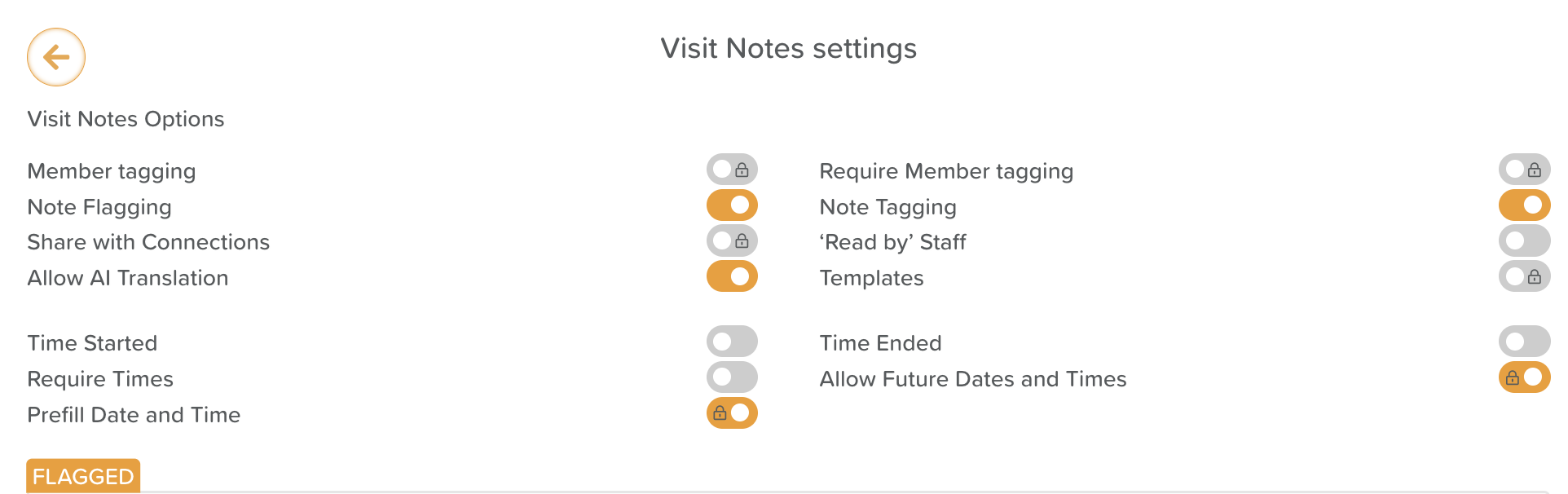
Member Tagging
This is disabled and locked to prevent additional participants from being tagged in a personal medical note for a specific participant.
Require Member Tagging
This is disabled and locked to prevent additional participants from being tagged in a personal medical note for a specific participant.
Staff Tagging
Disabled by default. When enabled, users can tag relevant staff in Notes. Tagging doesn't send a notification, but notes can be filtered by staff member.
Note Flagging
Allows staff to “flag” notes for importance or follow-up.
Note Tagging
Enables the use of custom tags (e.g., Lab Results, Follow Up Required).
Supports filtering, reporting, and organization of notes.
Share with Connections
This is disabled and locked to prevent health information from being shared with unauthorized individuals.
‘Read by’ Staff
Enables staff to 'Mark notes as read'. Shows how many staff members have “read” each progress note.
Helps track team communication and note visibility.
Allow AI Translation
Enables staff to translate notes into different languages using AI tools.
Useful for multicultural teams and multilingual families.
Templates
This is disabled and locked for the time being. If StoriiCare users request the ability to add templates to Visit Notes, we will consider updating this.
Time Started
Adds a “time started” field to notes.
Time Ended
Adds a “time ended” field, allowing notes to track a full time range.
Require Times
Staff must enter time fields before saving the note.
Often used by clinical teams or services needing precise documentation.
Prefill Date and Time
Automatically fills today’s date and current time when creating a note.
Saves time during busy shifts.
Allow Future Dates and Times
Permits staff to create notes with future timestamps.
Useful when preparing notes for scheduled events or appointments.
Note Type Name
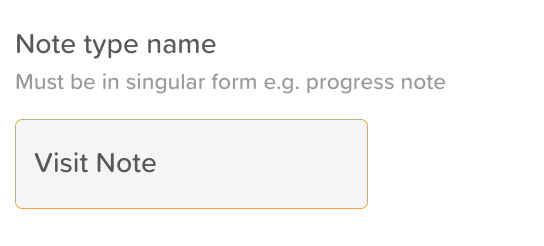
This field lets you rename “Visit Notes” to something else (e.g., “Medical Notes,” “Clinical Notes”).
Must be written in singular form (e.g., “Visit Note”).
Useful for organizations with custom terminology.
`
Note Type Tags
Customize the tags staff can apply to notes.
Examples might include:
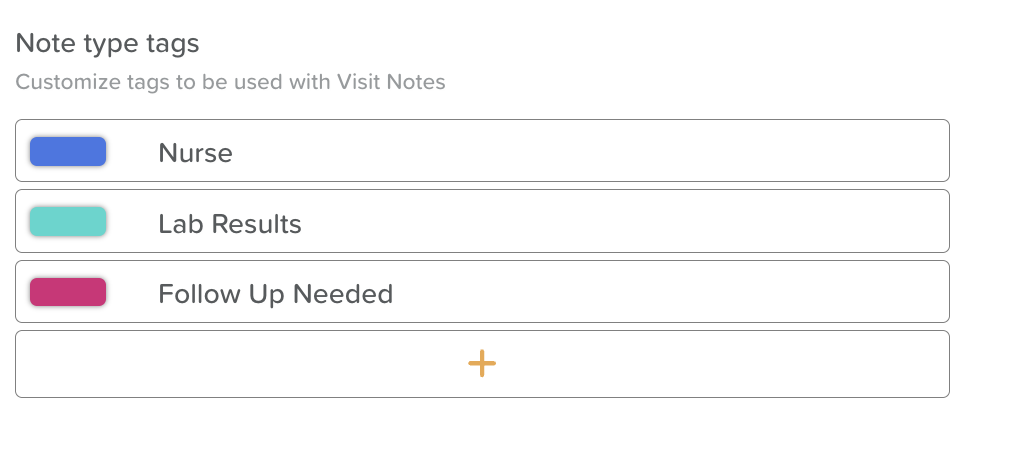
You can:
Edit tag names
Change colors
Delete tags
Add new tags using the + button
Tags improve filtering and reporting.
Templates
Visit Note templates help standardize documentation across the team.
See: How to Use Progress Notes Templates
Administrators can:
Create templates
Edit existing templates
Delete templates
Templates may include structured questions, prompts, or formatting.
Examples include:
Presenting concern/reason for referral
Assessment notes (mood, family involvement, financial/housing concerns)
Safeguarding flags (yes/no + details if yes)
Care plan or benefits changes discussed
Referrals made to other agencies
Follow-up timeline
Templates save time and improve consistency.
Custom Categories
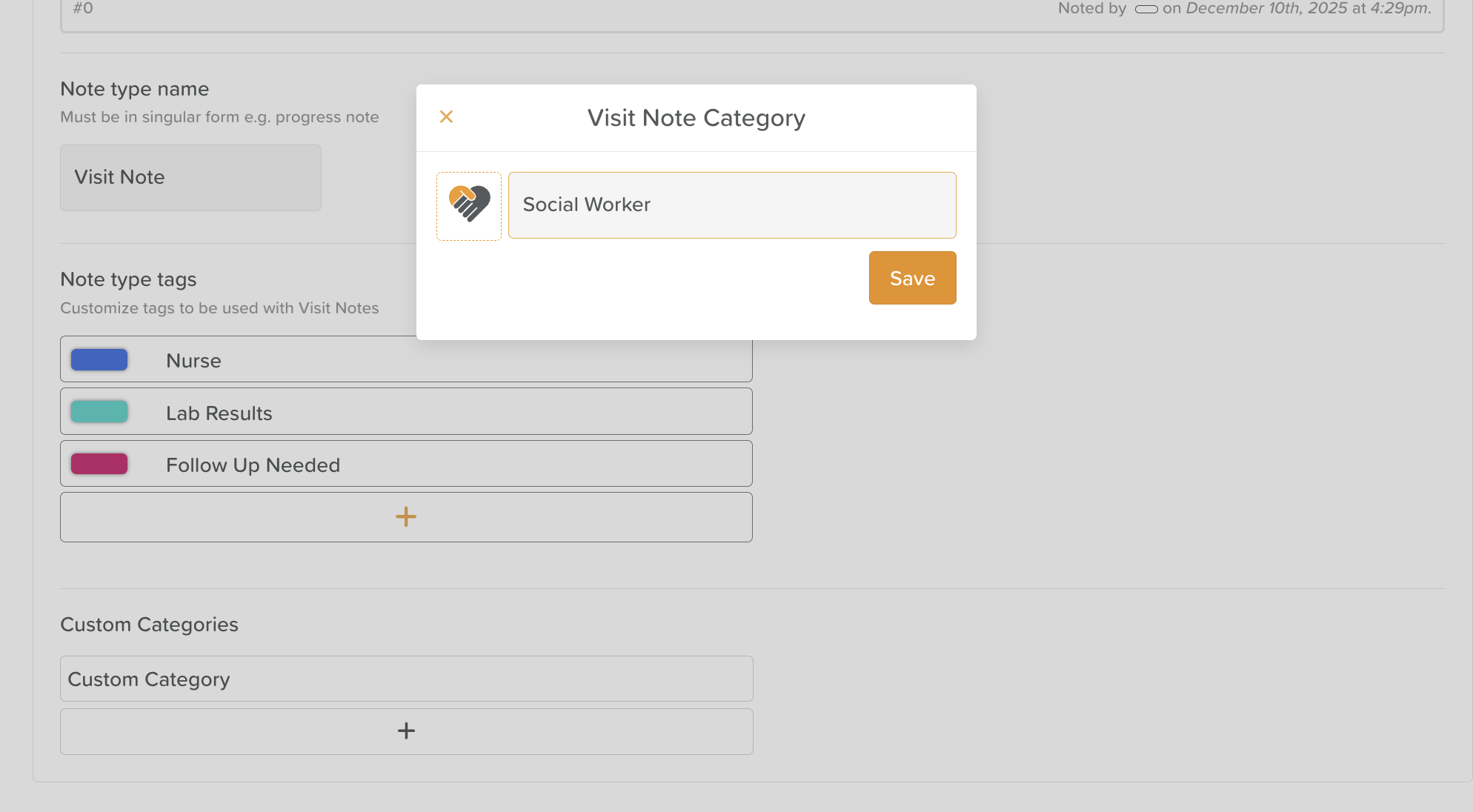
Users cannot edit or delete the default categories within Visit Notes, but it is possible to add custom categories to capture the professionals involved with your care recipients.
Scroll to the bottom of the Visit Notes settings page.
Under Custom Categories, click the +.
Give your category a title and choose an icon.
Click Save.
Your custom category will immediately be visible from the Visit Notes page across all participant profiles.
Need More Help?
If you need further assistance, you can reach out to our support team by emailing support@storii.com. Our support team is ready to help you with any questions or issues you may have.