
A Guide to Using Vital Signs Alerts
The Alerts feature in StoriiCare provides an additional layer of support for monitoring Vital Signs by notifying staff when observations meet user-defined criteria. Alerts help surface readings that may require attention, but they are not a substitute for clinical judgement.
This guide explains how alerts work, how to review and manage them, and the important compliance considerations staff must follow.
Important Clinical & Compliance Guidance
Vital Signs alerts are intended to act as supportive safeguards only.
Staff should be trained that:
They must not rely on the system alone to identify abnormal or concerning vital signs
Alerts do not replace professional judgement or clinical decision-making
Every vital sign must be interpreted in full clinical context, regardless of whether an alert is triggered
It is also important to understand that:
Alert thresholds may not be configured for all participants
Alerts may not exist for all types of vital signs
The absence of an alert does not mean a reading is normal or reassuring
Staff must continue to review all recorded observations as part of providing safe and effective care.
How Alerts Appear on StoriiCare
When an alert is triggered, you’ll see visual indicators to draw attention:
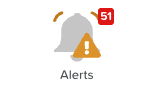
A red notification icon appears on the Alerts feature
A red triangle appears next to the specific vital sign observation that triggered the alert
Once reviewed and acknowledged, the red triangle will change to green.

Where Alerts Can Be Viewed
Alerts can be accessed from multiple areas of StoriiCare:
The Alerts feature
The Dashboard
A Participant’s profile
Within the Vital Signs feature itself
Currently, StoriiCare does not support push notifications or SMS notifications for Alerts. Users can set up email notifications for Alerts using the Workflows feature.
How to Review an Alert
When an alert is triggered, staff should always review the full Vital Signs chart, not just the individual reading.
Steps to Review an Alert
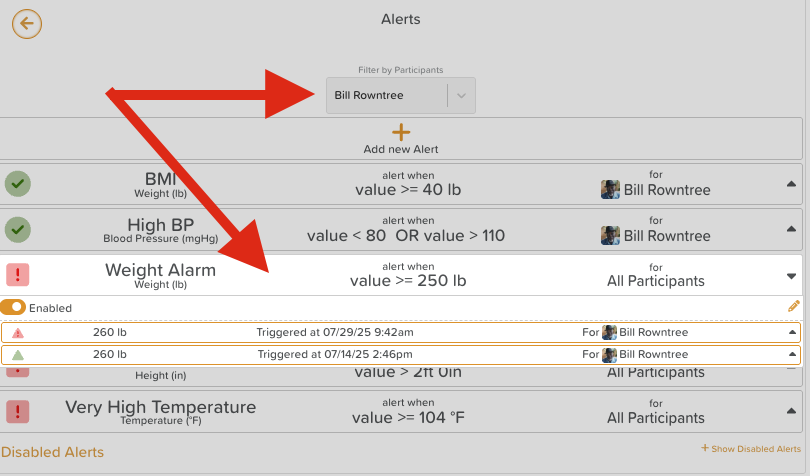
Open the Alerts feature.
Use the Participant filter at the top to narrow the list if needed.
Or click directly on an alert to view related items.
Click on the specific alert you want to review.
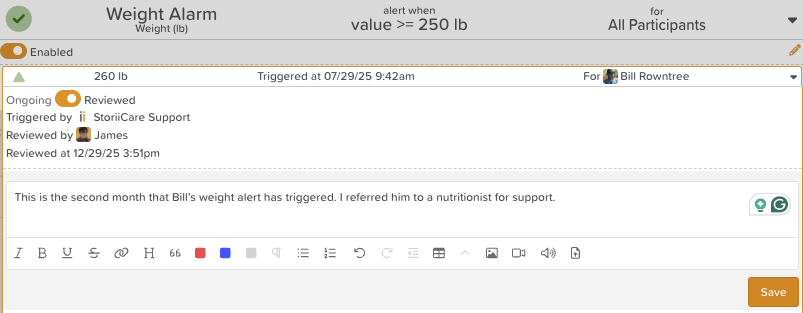
Change the toggle from Ongoing to Reviewed.
Enter a note with relevant context, such as:
Clinical observations
Actions taken
Escalations made
Monitoring decisions
Click Save.
The alert indicator will change from red to green, confirming it has been reviewed.
💡 Best Practice: Alerts are generated based on predefined thresholds. Staff should always review trends and historical data in the Vital Signs chart to understand the full picture.
How to Add a New Alert Type
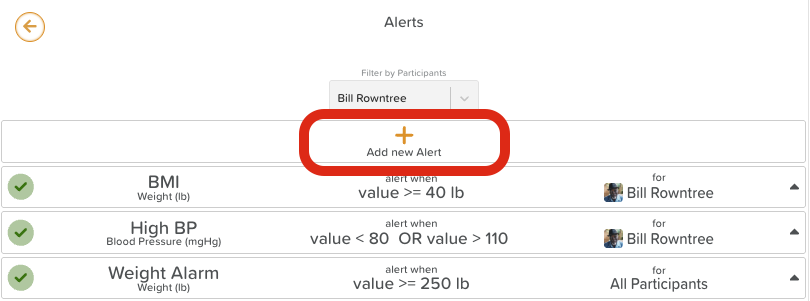
Open the Alerts feature.
Click Add New Alert.
Measurement
Enter a name for the alert.
Choose the Measurement type (e.g. Temperature, Heart Rate, Blood Pressure).
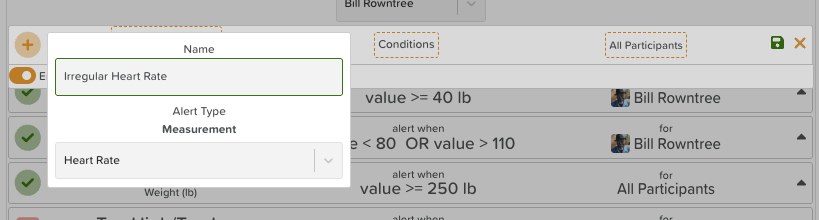
Conditions
Configure the alert trigger:
Static Value
More Than
Less Than
In Range
Outside Range
Change
Unit or percentage change
Max sample size
Average, Median, or Mode
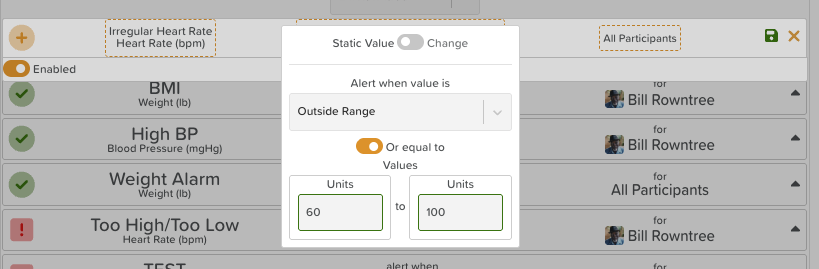
Participants
If the alert applies to all participants, click the green disk icon to save.
If the alert applies only to specific participants:
Click All Participants
Select the relevant participant(s)
How to Edit an Alert
Once an alert has been created, only the title can be edited.
To edit an alert title:
Open Alerts.
Select the alert you want to update.
Click the pencil icon.
Click on the alert title.
Make your changes.
Click the green disk icon to save.
⚠️ If other changes are required (e.g. thresholds or conditions), it is best to disable or delete the alert and create a new one.

How to Delete an Alert
Open Alerts.
Select the alert you want to delete.
Click the pencil icon.
Click the trash can icon.
Confirm your action.
Deleted alerts are permanently removed.

How to Disable an Alert
If an alert is temporarily not needed:
Open Alerts.
Select the alert.
Toggle Enabled off (left side).
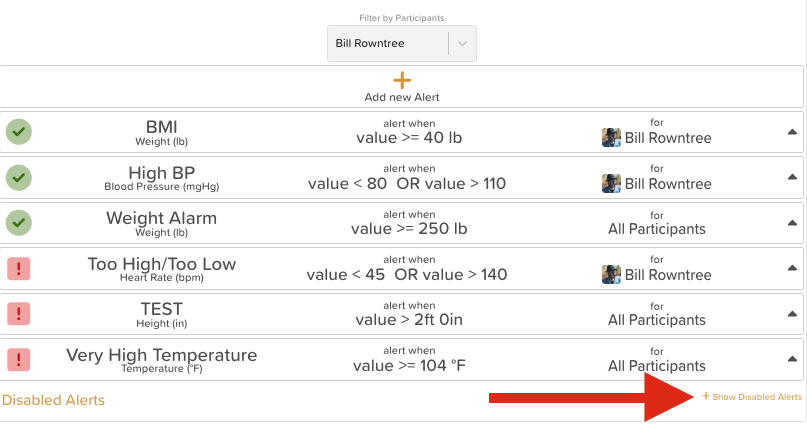
The alert will move to the Disabled Alerts section at the bottom of the page.
Click + Show Disabled Alerts to view disabled items
Disabled alerts can be re-enabled at any time

Best Practices
Use alerts as supportive prompts, not decision-makers
Regularly review alert configurations to ensure relevance
Document context and actions taken when reviewing alerts
Ensure staff are trained to review all vital signs, not only alerted ones
Need More Help?
If you need further assistance, you can reach out to our support team by emailing support@storii.com. Our support team is ready to help you with any questions or issues you may have.